
Digital products aren’t discussed often, but we couldn’t live without them. Jules Ehrnardt describes them as “software enabled product[s] or service[s] that offer some form of utility to a human being.” These include apps that we use and rely on daily, like GPS, banking apps, and email. As the saying goes, there’s an app for everything. More and more things are being digitized, and more novel concepts are coming to life with the wide range of opportunities the digital world provides.
One of the most challenging aspects of digital products is creating one of high functionality and quality. This requires an in-depth understanding of the user needs, product objectives, and fundamental digital design principles. This process is easier said than done because often, digital products are designed to meet a user’s need that hasn’t been addressed before. It can be challenging to conduct user testing with no similar existing products before designing the product. Additionally, if the product doesn’t exist yet, no product objectives are available to guide the design.
“Asking these questions pushes one to take a step back from the problem at hand and think critically.”
Overcoming these challenges isn’t easy, but asking three basic questions can be a brilliant guide. “Warren Berger’s Three-Part Method for More Creativity” says asking “why, what if, and how?” can revolutionize problem-solving. Asking these questions pushes one to take a step back from the problem at hand and think critically. Solutions often don’t come to fruition because the current approach is deemed good enough and never thought twice about.
With these concepts in mind, I began to examine digital products in my life, noting what I used, how often, and which I found most satisfactory. I honed in on meditation apps because I use one, and they are growing in popularity. While the app I use gets the job done, I can recount many moments of frustration. Meditation can be a complex topic, but apps meant to aid your practice shouldn’t be; the more complicated they get, the more detrimental they become.
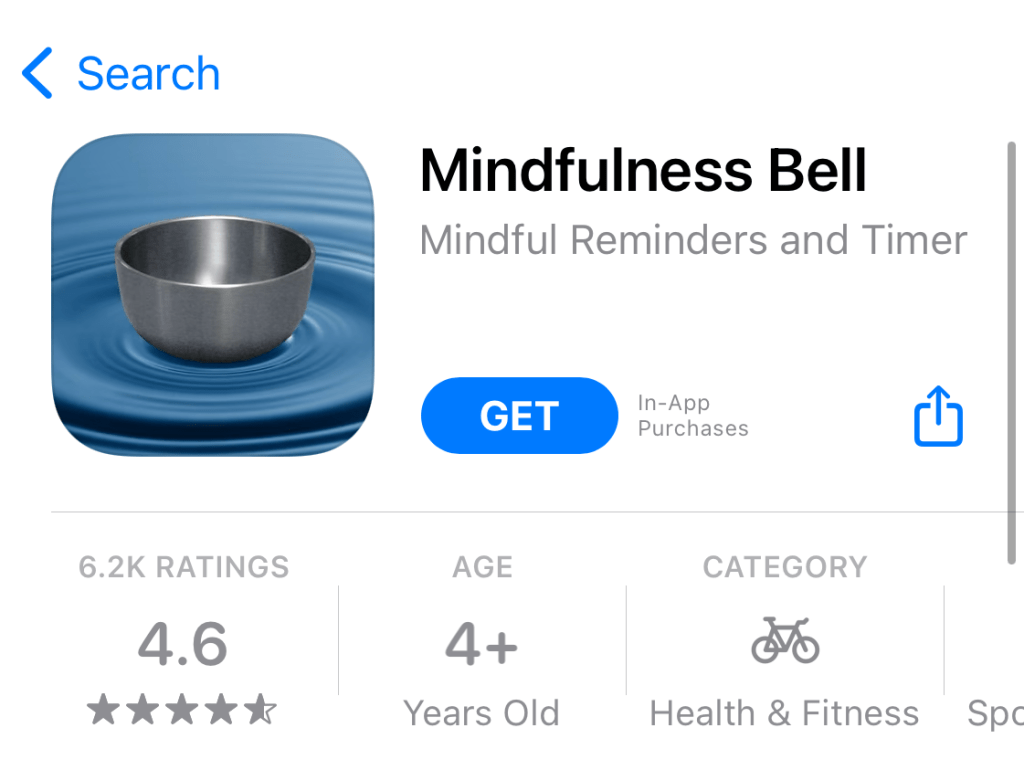
After browsing apps on the Apple App Store, I decided to redesign Mindfulness Bell by Spotlight Six Software LLC. It has many positive traits, including an easily accessible meditation timer. Still, the overall visual design is harsh, and it could benefit from some features such as tracking the frequency with which you meditate and for how long. Statistics like these help people gain insight into their practice, making it more personal and effective.
Next, I conducted a competitor analysis noting the positive and negative aspects of popular competing apps. I examined Calm, Headspace, Insight Timer, MindGarden, and Meditation Nest. I chose these because they were the first to appear in the App Store after searching “Meditation.” I took extensive notes on the content and structure of the apps and my experience as a user to better understand what makes an effective meditation app.

The apps that left the most notable positive impact offered a substantial number of free guided meditations in addition to their paid content, had an unguided meditation timer, and made statistics easy to find and understand. The apps that left a negative impression offered little to no free content, minimum (if any) ability to personalize your experience, and portrayed meditation as a means to the end of being happier. While meditation can increase happiness, practicing meditation is so much more than that for many people. Seeing it represented in this way made me, a user, frustrated because it minimizes the other aspects of maintaining a practice.
This research left me with immense insight into what is on the market and desired features for apps of this type. I will use it to assess and improve the Mindfulness Bell app to reach user needs and product objectives.
 Victoria Lorenz