I am a full-time graphic design student with a part-time job as a social media assistant at the Quinnipiac University Office of Marketing and Communication and currently have minimal writing responsibilities. As a student, I occasionally write about my creative process and the progression of a project from concept to completion. This is more often done through visual elements than writing. Short paragraphs typically accompany these visual elements and provide more insight into the reasoning behind design decisions and aspects.
As a social media assistant, I frequently write captions for social content such as Instagram posts. This context requires concise writing and awareness of trends, jargon, and connotations of emojis. I am occasionally tasked with researching various topics to inform visual content and accompanying captions later on. When researching, I tend to make lists and use bullet points to highlight important facts rather than writing a formal report because scannable information is more effective for communicating the topic’s essence to my team.
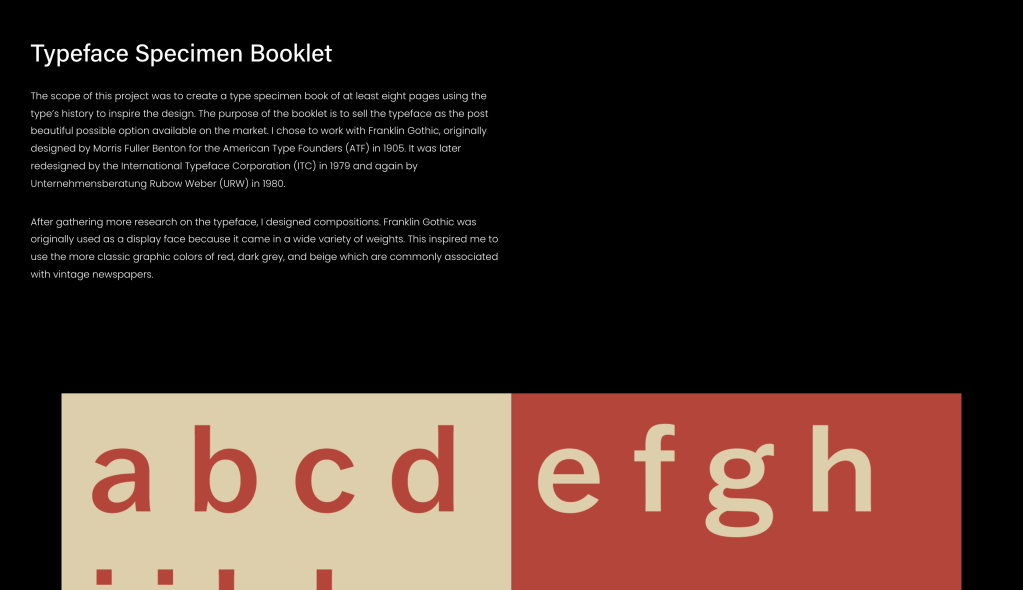
I tend to approach writing in the same way I speak, especially when describing my process as a graphic designer. I want the writing to accurately reflect myself because design is an incredibly personal thing. When writing captions for the University, I need to be consistent with Quinnipiac’s brand guidelines and image, limiting creative freedom but generally ensuring reliable, high-quality content.
To keep my writing organized, I outline the main topics I plan to write about and then fill in the gaps with details. I also consider how I will integrate visual elements in the final product as they are the primary focus. My approach differs from the standard because images typically support the text, whereas I defend my visual elements through text.
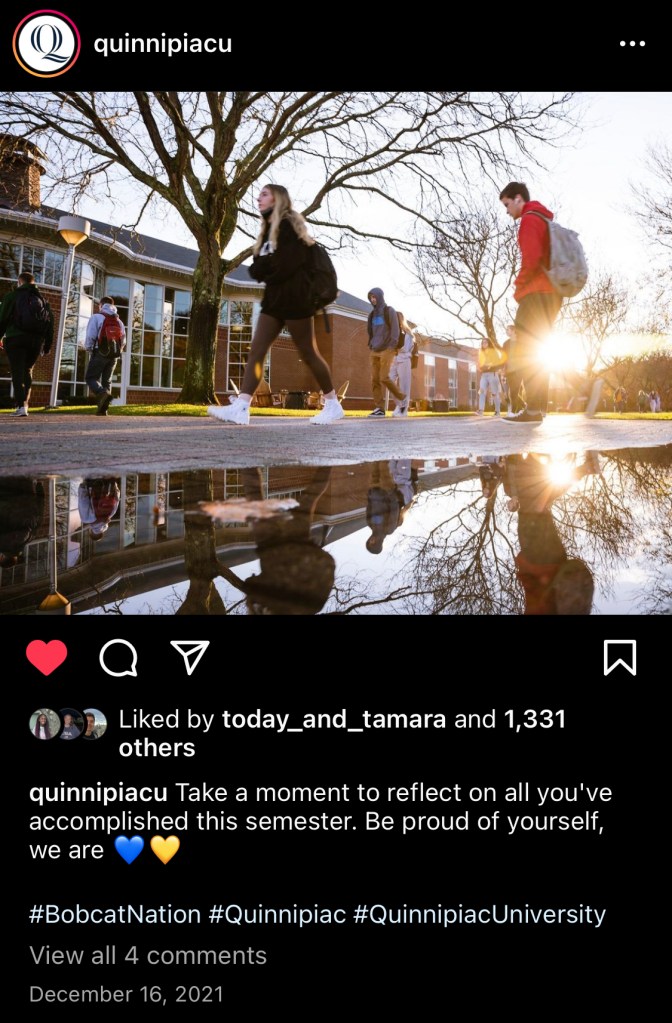
Writing for social media is a similarly backward process; captions are often inspired by images rather than the other way around. Like most creative processes, it requires brainstorming and refinement. I find writing captions more challenging than other forms of writing. They do not always reflect spoken language because they contain emojis, slang, and witty play on words.
This style relies heavily on understanding the target audience and attempting to gain their fleeting attention. As a young person who frequently uses Instagram, I am at an advantage because I am familiar with the trends and am part of the target audience, giving me an inside perspective. I also regularly research trends in social media captions. Many relate to specific seasons, special events, and holidays. Some examples include motivational captions near finals week and midterms.
In both writing styles, I find revision is the hardest part. I always resent cutting down my writing because I feel that the time I spent on the original is wasted (even though I know that is not the case). I also have trouble differentiating what is essential to the topic and what I find interesting, so cutting down my drafts is even more challenging. I believe what I need to improve is getting directly to the point and understanding what content is essential and why.
 Victoria Lorenz