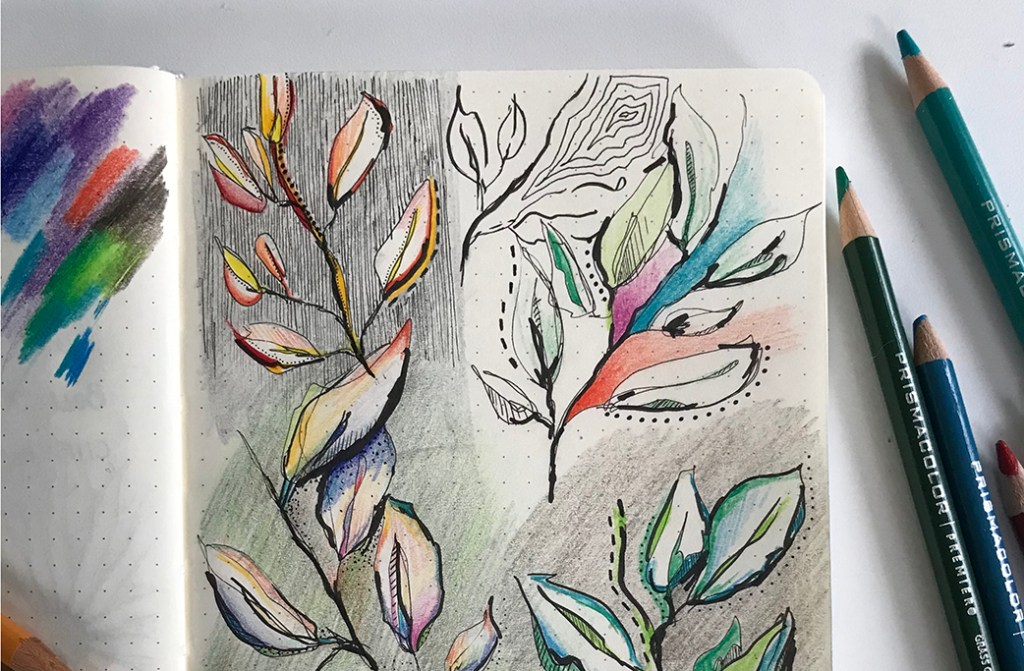
Graphic designers primarily work digitally, so do we really need to keep a sketchbook? Angel Jimenez writes that sketchbooks serve as a place to jot down ideas and let inspiration flow. So, if you work in any creative process, the answer is yes; you absolutely do need to keep a sketchbook.
What is a Sketchbook
Sketchbooks come in all shapes and sizes with different kinds of paper, so what you use is up to you. It helps to keep sketchbooks small so you can bring them with you anywhere – you never know when inspiration will strike. Lisa Marder from The Spruce Crafts suggests keeping three sketchbooks, each a different size. The variation lets you explore different levels of detail and try other creative exercises. Sketchbooks also come in a wide variety of paper types; you can get everything from thin sheets like printer paper to thick sheets perfect for watercolor.
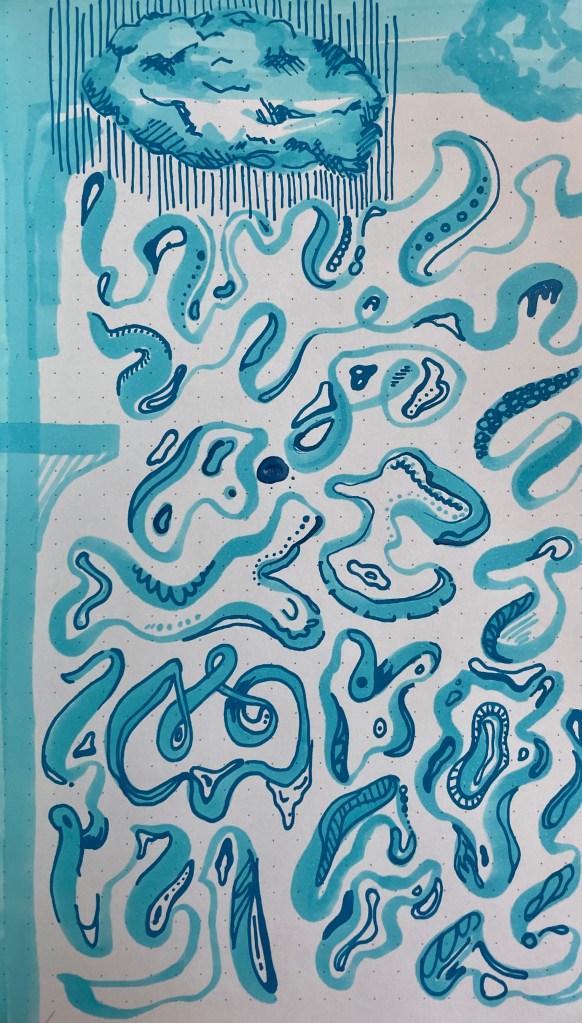
My sketchbook is roughly 5 inches by 8 inches with dotted ruling. I’ve had it for just over a year and a half and am about halfway through it. I usually draw in it with pencils and black ink pens but have experimented with many different materials. Most recently, a professor let me borrow an ink pen and a Copic marker to experiment with, which added lots of exciting color to my work. The pages are thinner, so I often deal with bleeding (especially with the Copic marker). I’ll likely get something with a little more substance to avoid this bleeding in my next sketchbook, but it has left me with ghost images that inspire even more sketches.
What You Need
Art is often thought of as loft and expensive, but sketchbooks don’t need to be fancy or break the bank. In fact, I bought mine from Walmart, and it has held up wonderfully. The function of a sketchbook – facilitating space for play and exploration – is more important than the book itself.
Similarly, art supplies are more accessible than most people think. Art stores like dickblick.com and jerrysartarama.com are known for reasonable prices. I’ve found the most success obtaining supplies in unexpected places like Five Below and the dollar store. Taking good care of your supplies also goes a long way in making them last. A simple pencil case from elementary school keeps my pencils together and prevents me from losing or breaking them.
I also find it very helpful to keep a Pinterest board with sketchbook inspiration on hand. I have a lot of boards, but my recent favorites have been pencil drawing and pen and ink. I’ve wanted to practice those styles, and one of the most effective ways has been to explore them in my sketchbook! Maintaining Pinterest boards is a form of visual research and is arguable one of the most underrated resources for learning.
Explore and Play
Innovation stems from exploration and play, so freely utilizing both in a sketchbook can lead to truly great work. It also serves as a record of your progress as an artist or designer. It can show the evolution of technical skills and elements of style that otherwise would have gone unnoticed or not have developed at all.
Working without inhibition also opens up opportunities for creativity. There are also a lot of exercises you can use to push your limits and avoid ruts. My favorites are blind contour drawing and word of the day prompts.
To do a basic blind contour exercise, select an object and then draw it without taking your eyes from it. When you do this, don’t look at the paper and don’t lift your pencil. The result will be a disjointed line drawing that may (or may not) resemble your subject. Next, to turn this drawing exercise into a creative challenge, turn that drawing into something entirely different. I love blind contour drawings because it conjures a childlike sense of creativity. My blind contours usually turn into monsters or other odd creatures.
Word of the day prompts are my favorite because, as an avid reader, I often get to learn a new word with the bonus of making art inspired by it. Like blind contour drawing, you set the rules and can interpret the word however you’d like, leading to some truly unique results.
Results
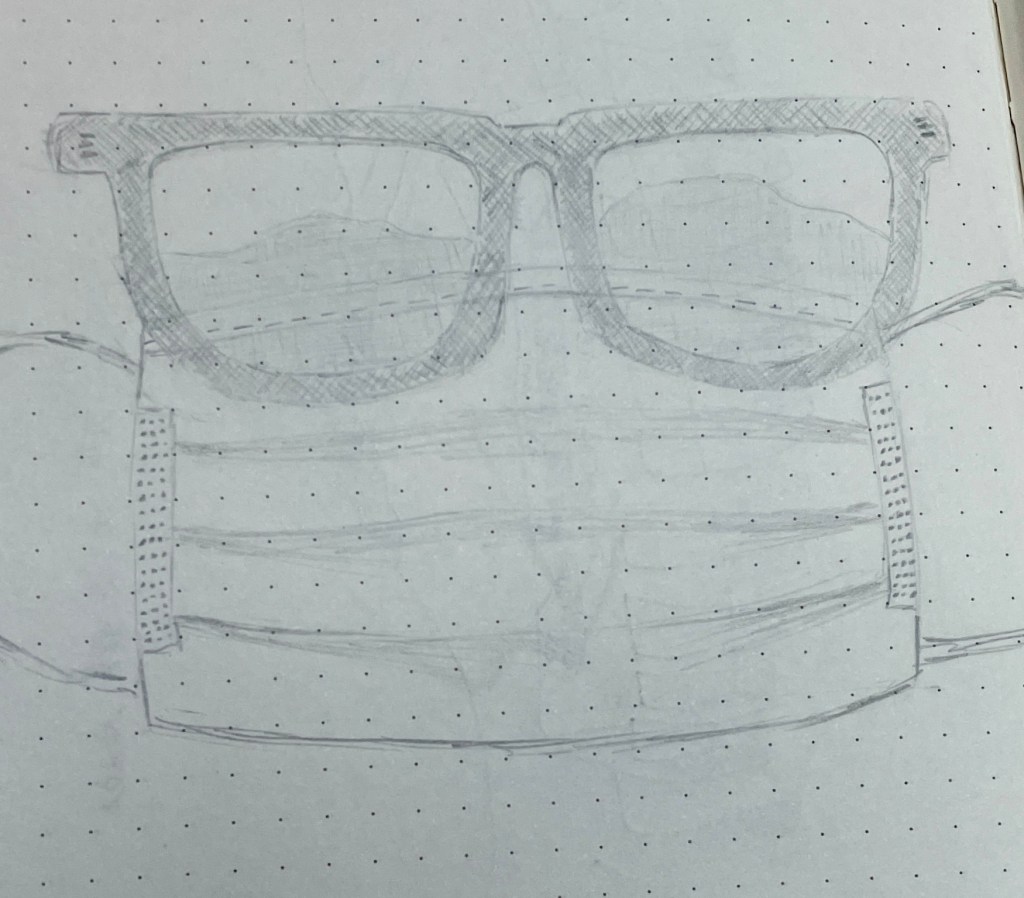
The benefits of sketchbooks aren’t all talk; my sketchbook inspired two of my favorite projects. The first was a gif that came from a word of the day prompt. The word was “encumber,” and the first thing that came to mind was my glasses fogging when wearing a mask at the height of the pandemic. I added windshield wipers to the glasses for humor and realized that it would make a great motion graphic. I was so excited that I got right to work on creating a gif which remains one of my favorite projects over a year later.

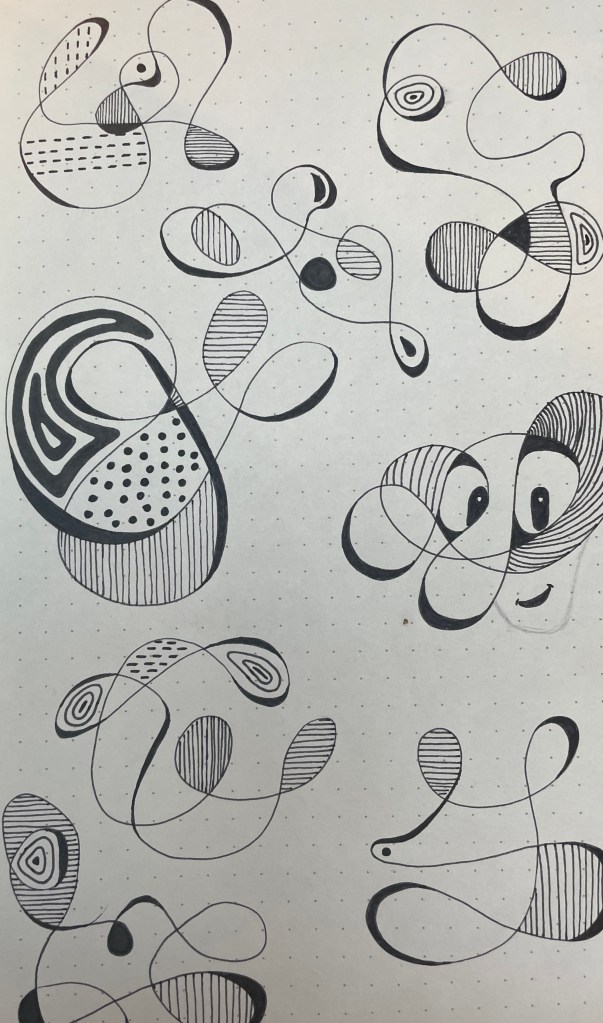
Another instance of inspiration directly from my sketchbook is when I was developing my branding. I got in a rut and couldn’t think of anything that felt like it represented me. I took out my sketchbook to take a break and draw for a while when I realized that few things are more personal than a sketchbook. I began flipping through for inspiration when I landed on abstract line studies, one of my favorite things to draw when I’m stressed or in a rut. These directly inspired my logo and primary brand elements.

Sketchbooks are vital to the creative process. They help us develop as creatives and boost creativity. If you don’t have a sketchbook, this is your sign to start one!
 Victoria Lorenz