What is design thinking?
Design thinking is a way of approaching problems that considers them as holistically as possible to produce the best possible solution. Design thinking can – and should – be applied when a problem arises. It can be used in any industry or profession because its goal is to meet unique needs.
Many designers employ design thinking to assist their clients in achieving the results they are looking for because it breaks down problems in a way that makes them easier to understand. This approach is great for agencies and freelancers who may not be familiar with the company or the challenge at hand.
One of the benefits of design thinking is that the concept is highly elastic. There are many ways to employ it, and none are right or wrong. The important thing is to find the method that works best for you.
When I first used design thinking, I was a freshman in college. We read an article by Rikke Dam from the Interaction Design Foundation about what it is and how you can use it. Dam uses a five-stage process that begins with empathy and ends with putting solutions to the test. I also use this approach, but others, such as the Fast Company Staff, approach it slightly differently and include steps that encourage us to stop, evaluate, and repeat steps to ensure a thorough approach.
Empathize
I always start design thinking with empathy. This may sound simple, but empathy can be highly complex. Kendra Cherry from Very Well Mind explains three kinds of empathy: affective empathy, somatic empathy, and cognitive empathy. Affective empathy is “the ability to respond to other people’s emotions appropriately,” somatic empathy is “the ability to feel what another person is feeling,” and cognitive empathy is “the ability to understand someone’s response to a situation.”
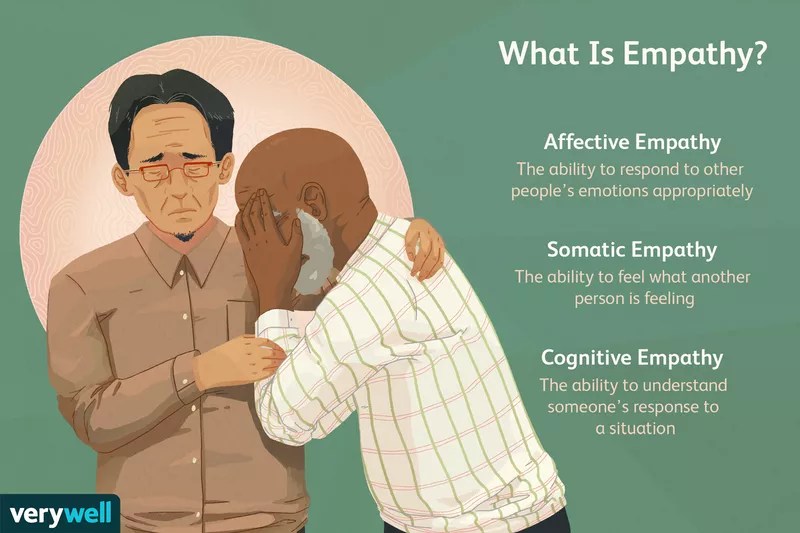
Each type of empathy is extremely valuable in the design thinking process because it helps the problem understand more clearly where the issues are. Empathy also helps bridge the gap between what the user feels and what we want them to feel.
Define
Once we thoroughly understand a situation, we can define it. They say you don’t truly know something until you can teach it. In design thinking, you don’t really see the problem at hand until you can precisely put it into words.
One of the most useful tools for defining a problem is the “how might we” (HMW) statement. Nikki Anderson from Dscout writes that HMWs “reframe our insights into opportunity areas and innovate on problems found during user research.” Doing so keeps solutions user-centered and more likely to be effective.
Ideate
The next step in the process is to ideate. Audrey Harley from the Nielsen and Norman Group defines ideation as “the process of generating a broad set of ideas on a given topic, with no attempt to judge or evaluate them.” The last section of their definition is the most important. People often dismiss their ideas as unrealistic or silly before giving them a fair chance. The goal of ideation is not to come up with the best possible solution immediately but with as many ideas as possible.
Prototype
When ideation is complete, we can begin prototyping. Justin Morales from Adobe writes that prototyping is the process of “bringing concepts to life, ranging from paper ideas to digital designs. At its core, a prototype is an early sample of a design that allows users to interact with it before a final product is developed.”
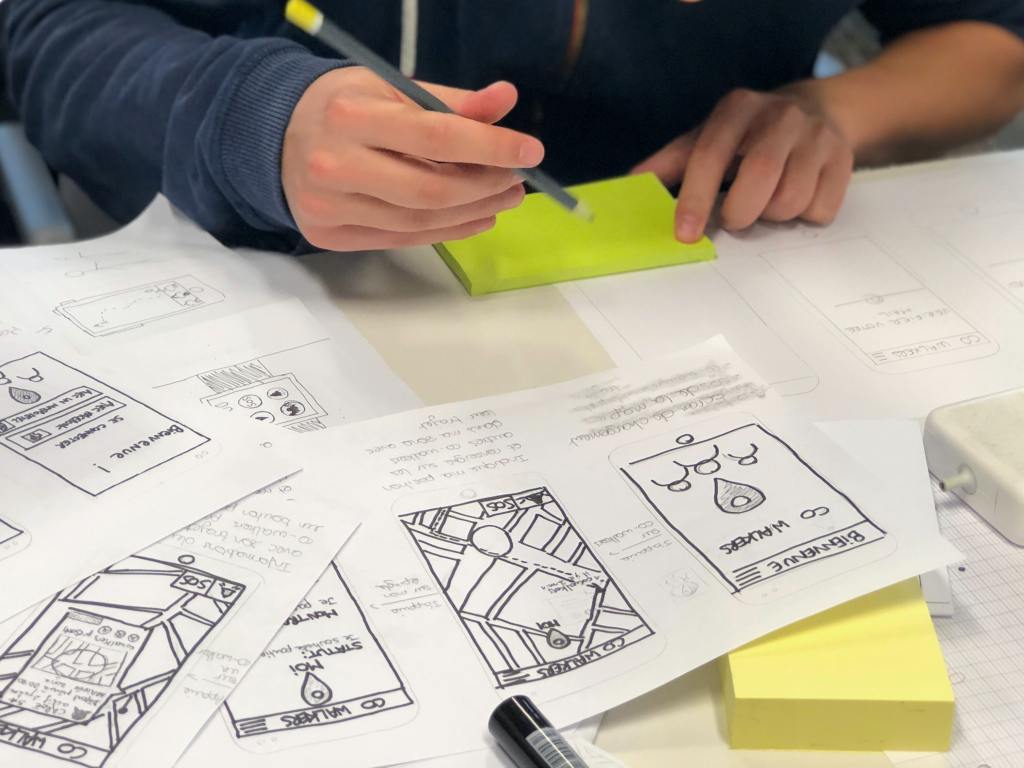
Prototyping is also a great way to explore solutions without spending too much money. In his TED Talk, Tim Brown talks about how Aravind Eye Institute in Madurai, India was able to cut the cost of intraocular lenses from $200 a pair to $4 a pair by using prototyping.
Test
The final step in design thinking is to test the prototype. The most important part of this step is to note all feedback. When we reach this step, our solutions seem perfect, but it is vital to have someone who is removed from the project test the solution. I often recruit friends and family who know nothing about design thinking, or my process test prototypes. Because they are unbiased, they have a new point of view and provide helpful feedback.
Repeat
Although design thinking has five steps which are usually explained in the same order, it is a non-linear process. Revisiting steps throughout the process is vital, ensuring a complete solution. Each stage of the process informs the others, and while they can exist independently, the results are far better when used in conjunction with each other. That’s what makes design thinking so unique.
 Victoria Lorenz