
What is empathy and empathy research?
User experience designers use the word “empathy” a lot, but what does that really mean? According to Greater Good, empathy is generally defined as “the ability to sense other people’s emotions, coupled with the ability to imagine what someone else might be thinking or feeling.”
It is critical to note that empathy is different from sympathy. Dictionary.com defines sympathy as “the act or state of feeling sorrow or compassion for another.” However, most people are familiar with sympathy in the form of pity, feeling bad for someone because of their circumstances.
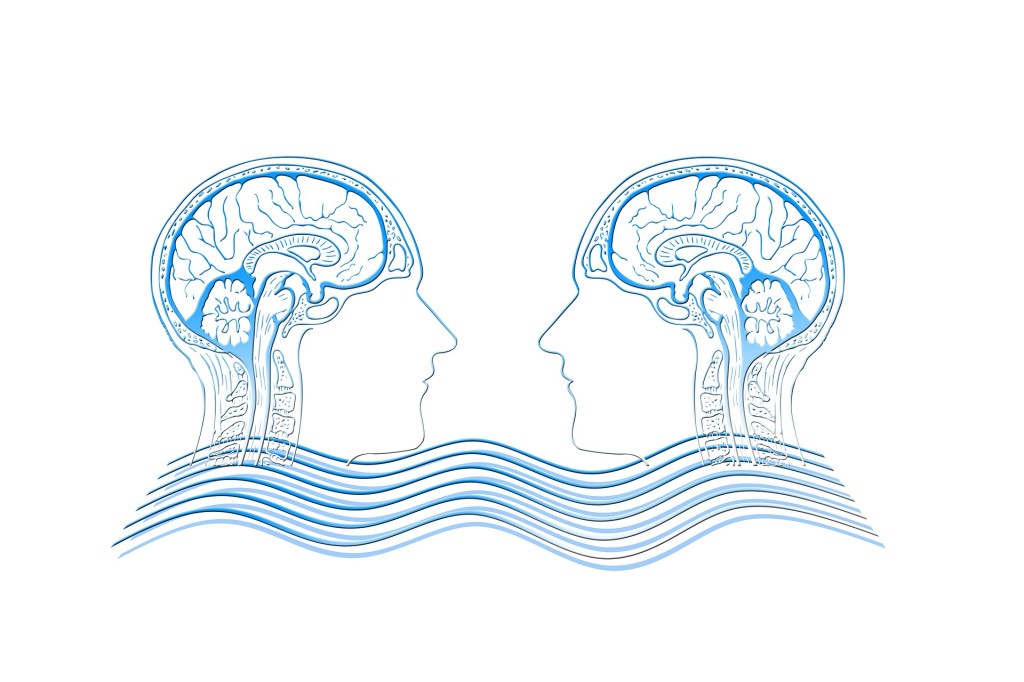
The goal of a user experience (UX) designer is to provide the customer (commonly referred to as the user) with a positive experience. To ensure a positive experience, UX designers must understand the user’s feelings, needs, and wants. The first step in ensuring a positive experience is using empathy to understand what the user feels and needs.
Different methods intro
There are many ways to assess what a user feels and needs, and they all utilize empathy. Understanding the different empathy research methods is vital because it is the foundation for the ultimate user-centered solution.
In the ideal scenario, we have access to as many users and as much time and money as we want, but unfortunately, this is rarely the case. As such, empathy research methods range from exercises that can be completed with a simple pen and paper to others that require recorded in-person interviews.
Storyboarding
One of the most popular empathy research methods is storyboarding. Nick Babich of Smashing Magazine says, “a storyboard is a linear sequence of illustrations, arrayed together to visualize a story.”
Storyboarding has origins in motion picture production, such as movies and animations. It creates a visual outline of how something functions and avoids spending the time and money that complete productions require. Storyboards lament the tale of the user’s experience and help UX designers better understand the processes at hand.
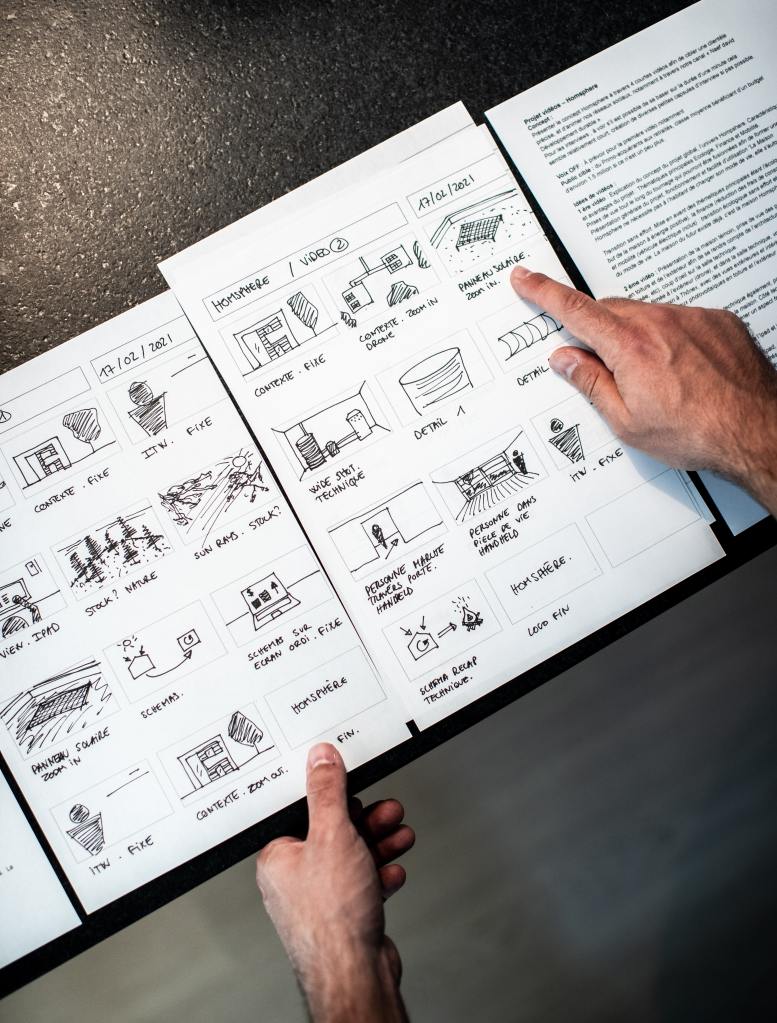
Storyboarding is also highly cost-effective because it requires only a pen or pencil, paper, and ten to twenty minutes. Not only are the required materials cheap and readily available, but it also does not take up much of our precious time. This process creates a firm foundation for projects while also conserving recourses.
Shadowing
Another approach to empathic research is shadowing. Think.design defines shadowing as “a qualitative research technique conducted on a small scale where the researcher acts as an observer. In shadowing, researchers observe real-life situations of a research subject or participant for a set period of time.”
While shadowing is more time-consuming and requires the researcher to access a user, it has more room for discovery. Designers often struggle to see where designs fail because they know how they are meant to function. Shadowing frequently reveals the user’s confusion, frustration, and other unexpected feelings.

There are three kinds of shadowing: natural, controlled, and participatory. In natural shadowing, the observer does not interfere with the subject. In controlled shadowing, the observer designs a task and then observes the execution. In participatory shadowing, the observer completes the task along with the subject.
One drawback to shadowing is that the user may behave differently than they usually do. Often, people feel pressured when being observed. In psychology, this is called the observer effect or Hawthorne effect.
Cultural probe
Although a cultural probe sounds highly invasive, it’s less intense than you may expect. According to Wicked Problems, “a cultural probe is a documentation device such as a workbook, worksheet, disposable camera, or tape recorder, that is given to a participant with instructions on how to complete it.”
Cultural probes are highly hands-on to the user and provide vivid details for the researchers. One of the primary benefits of cultural probes is that the user’s recording of their experience is one of the most accurate available. In other methods, such as shadowing, the recording researcher may misinterpret an event or situation. The user has the most thorough understanding of what they are feeling or experiencing, making cultural probes genuinely unique and invaluable insight.

Despite offering a unique angle, cultural probing has some drawbacks. First, it can be expensive to undertake. It can require extensive time from the user, and providing equipment can be challenging depending on your desired form of documentation. The second, and most notable drawback, is that the user may not fully understand what they are trying to do or how they are feeling. It can be challenging to interpret their record when this occurs, but it is a clear sign that something is not working. Should this happen, designers must ask themselves how they can adjust the design to meet the users’ needs.
Empathy mapping
Empathy mapping is similar to storyboarding in that it visually represents what the user is experiencing. Rather than drawing it, however, an empathy map uses written descriptions of different categories. Jennifer Leigh Brown from UX Booth writes, “an empathy map is a simple, easy-to-digest, visual that captures knowledge about a user’s behaviors and attitudes.”
Generally, empathy maps have the user in the center, with quadrants surrounding them, focusing on what the user says, thinks, feels, and does. Creating a customized empathy map for the user you will be working with is vital. Sarah Gibbons from Nielsen and Norman Group says, “always start with a 1:1 mapping (1 user/persona per empathy map). This means that, if you have multiple personas, there should be an empathy map for each.”
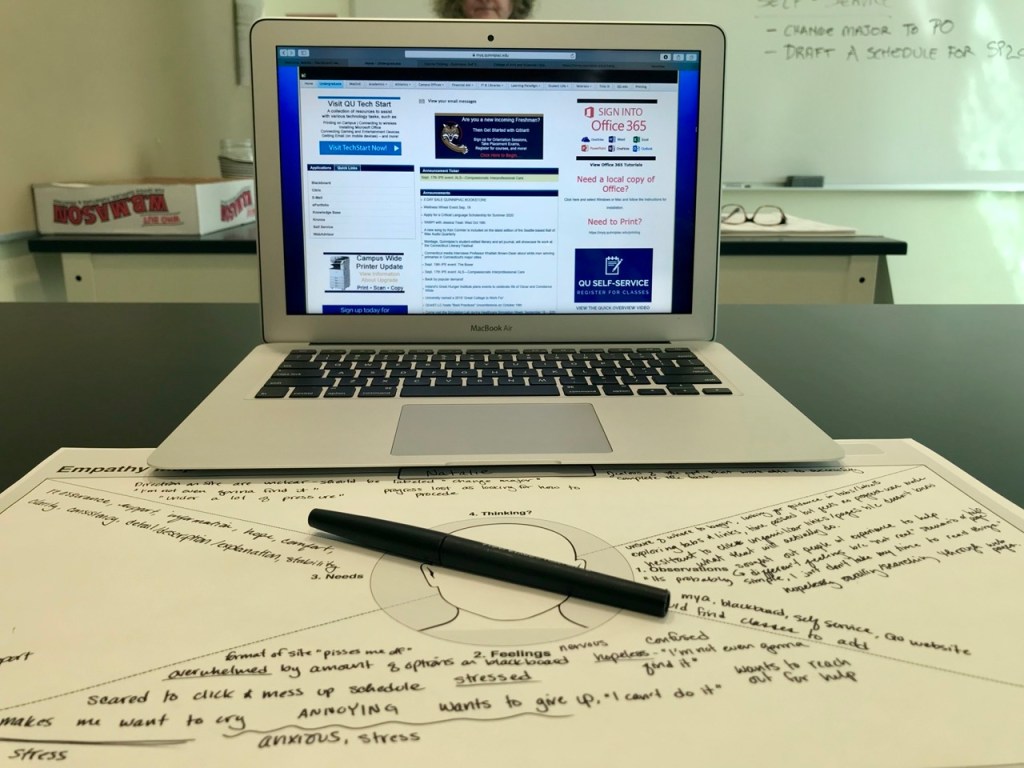
Like storyboarding, empathy maps break down the user’s experience into more digestible parts. Empathy maps can also be quicker than storyboards because the content is written rather than drawn.
Empathy maps are one of the most flexible research methods because they can be completed with or without the user. You can fill out an empathy map with a user in mind or sit down with someone and ask them questions about their experience. One drawback to this more invasive approach to empathy mapping is that, like shadowing, it may be influenced by the Hawthorne effect.
Conclusion
While all these methods are framed in the context of user experience design, empathy research can (and should) be applied to every field. Because there are so many ways to approach empathy mapping, there is no excuse not to try it out!
 Victoria Lorenz