The Approach is Important
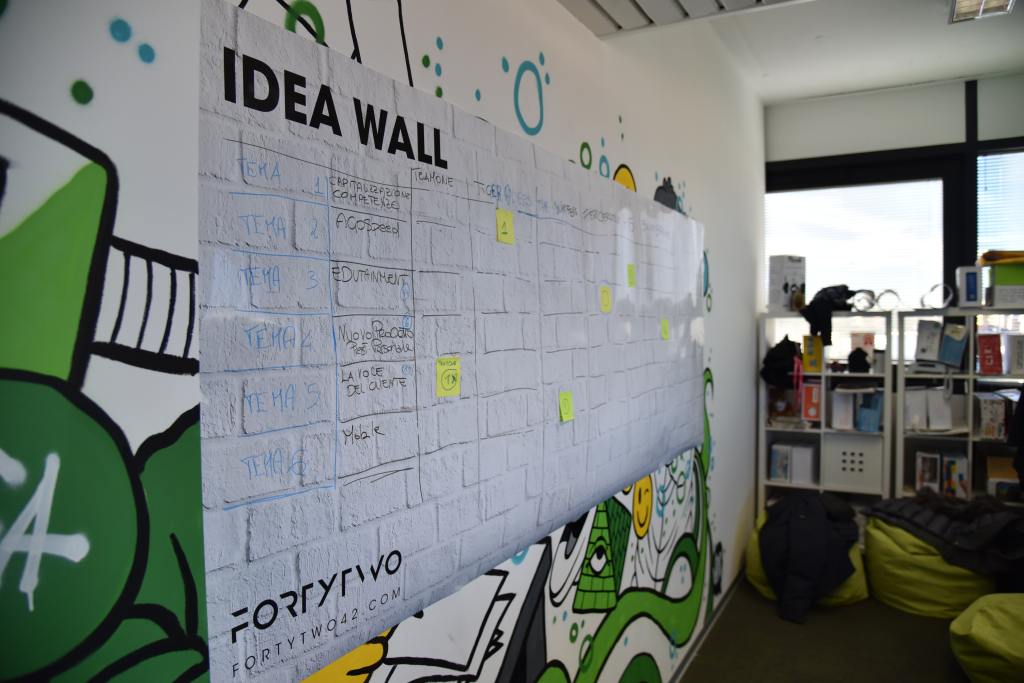
Ideation is the process of generating ideas and solutions to a specific problem. It usually occurs in sessions where designers apply different techniques. Rikke Dam and Teo Siang from Interaction Design Foundation say the goal of ideation is to “generate a large number of ideas that the team can then filter and cut down into the best, most practical or most innovative ones in order to inspire new and better design solutions and products.”
Different ideation techniques help inspire new and unique potential solutions. Switching approaches to ideation encourages us to view the problem from a different perspective. The more unique perspectives we can take, the more significant number of ways we can solve the problem. This part of the process relates very closely to empath, which we focus on earlier in the Design Thinking process to give ideation a strong foundation.
Solo vs. Team Solving
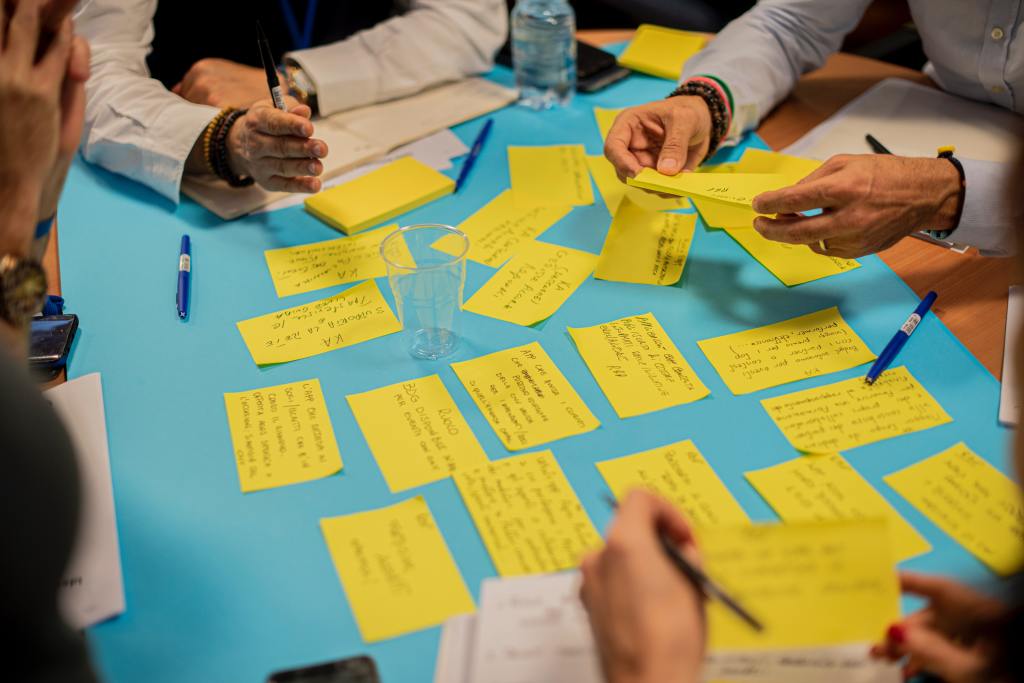
Ideation can be done independently or with a team. Many ideation techniques, such as brainstorming, brainwriting, and brain walking, rely on teams to complete. These methods encourage Design Thinkers not only to push their ideas to the limits but to build on the ideas of others as well.
There are plenty of solo approaches to ideation as well. Some of the most popular are brain dumping, storyboarding, making mind maps, and sketching. To better understand how these methods work, I tried them all out and got some great results.
POV Statements
I recently examined three apps, noting user feedback and experiences. Using this positive, negative, and suggestive data, I crafted point of view (POV) statements addressing who the user is, what they need, and why. You can read more details in my article Learn to Read Minds like a UX Designer. POV statements pinpoint problems, so they’re the perfect focal point to apply ideation techniques to. I’ll examine Spotify, a popular audio content streaming service, for these examples.
Brain dump
Brain dumping is the little-known solo version of brainstorming. In brainstorming, a team comes together to generate as many ideas as possible relating to the problem at hand. Rikke Dam and Teo Siang write that a brain dump is highly similar. Participants write down their ideas alone and share them with their team later.
Although I didn’t have a team to confer with afterward, I practiced brain-dumping some ideas for the POV statement, “Users who do not have premium accounts need more control over their experience because the restriction of features like the order of songs and ability to skip takes away from the inherently personal experience.”
The following list is what I came up with within a five-minute time limit. Time limits often make the ideation process exciting and effective because it forces us to squeeze out as many ideas as possible before the time runs out.
- If users aren’t willing to pay for premium, they can listen to more ads to increase the number of skips they get per hour
- Users can do certain things like referring friends to create an account which gives them points that they can spend to unlock certain premium features
- Artists who represent Spotify can give their fans discount codes for a percent off the premium subscription
- Users can opt to listen to one very long section of ads rather than having them sprinkled throughout their listening session
- Spotify can partner with a speaker/headphone company to give owners a yearlong free trial (which they won’t want to cancel)
- Sharing content about Spotify on social media gives users a set amount of “premium time” where they can access premium features (limited to a certain number of shares each day)
While I enjoyed this method, I felt more excited about the following methods because they are more visual, and I think better that way. For me, brain dumping was an excellent warm-up, but likely not the most effective method.
Storyboard
Next, I tried storyboarding. Storyboardthat.com says a storyboard is a “graphic organizer that plans a narrative.” I used the same POV statement as brain dumping: “Users who do not have premium accounts need more control over their experience because the restriction of features like the order of songs and ability to skip takes away from the inherently personal experience.”
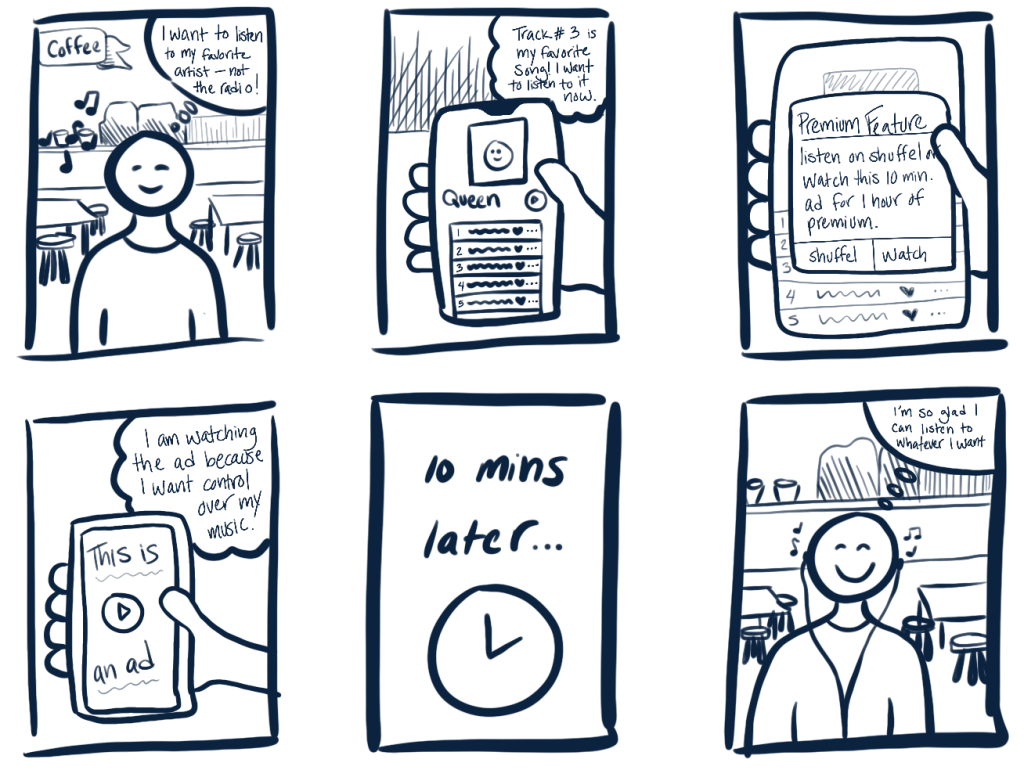
This storyboard helped me empathize with the user because I imagined a detailed scenario of someone in a coffee shop wanting to listen to their favorite music rather than a generic person who wants more control over their listening session. I decided that Steve, the user, would be most happy if I combined some of the ideas I came up with in the brain dump.
In the final storyboard, Steve wants to listen to his favorite music and control the order of the songs. To access this premium feature and not be interrupted by ads throughout, he watches a 10-minute ad. Although he does not have a premium account, he now has temporary access to premium features and can feel more connected to his listening experience.
Mind map
The next ideation technique that I tested was mind mapping. Mindmapping.com describes the process as a tool to generate ideas without worrying about structure or order. Mind mapping can also help find unexpected connections between aspects of a problem previously thought to be unrelated or have minimal influence on each other.
To complete this mind map, I focused on the POV statement, “Users who enjoy discovering new music need more control in the algorithm because their specific interests, which are not reflected in listening data, are not accounted for.”
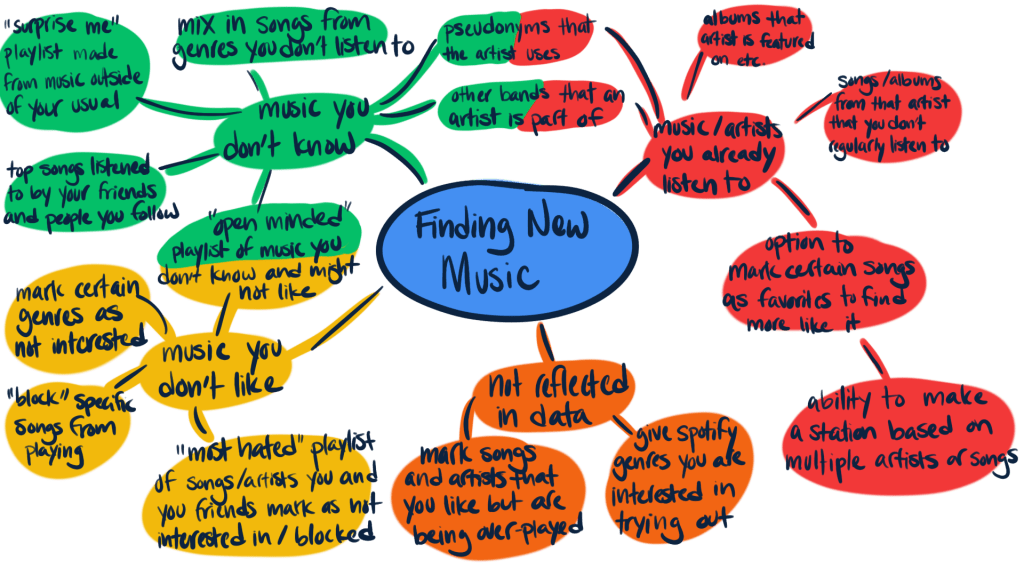
Seeing my ideas in this fluid format helped me generate even more concepts as I went. My favorite solution that I developed is a playlist of songs that are popular among your friends and the people you follow on Spotify. This resource would be a fun way to listen to new music and learn more about your friends.
I also developed silly ideas like a “most hated” playlist containing songs you and your friends mark as something you don’t want to hear. Although this felt silly when I wrote it, it helped me generate the “open-minded” playlist, which contains music far outside the user’s interests that they may (or may not) enjoy. While this may still be farfetched, it is an exciting approach to finding new music that some users may find appealing.
Sketching
The last method that I used was sketching. According to Karishma Patel, sketching is a valuable tool for explaining ideas to others or working through them in more detail than a written description. Because my sketches focus on features in an app, they somewhat resemble wireframes but are rougher and more experimental.
To complete this sketch, I focused on the same POV statement for the mind map: “Users who enjoy discovering new music need more control in the algorithm because their specific interests, which are not reflected in listening data, are not accounted for.”
SO SKETCH
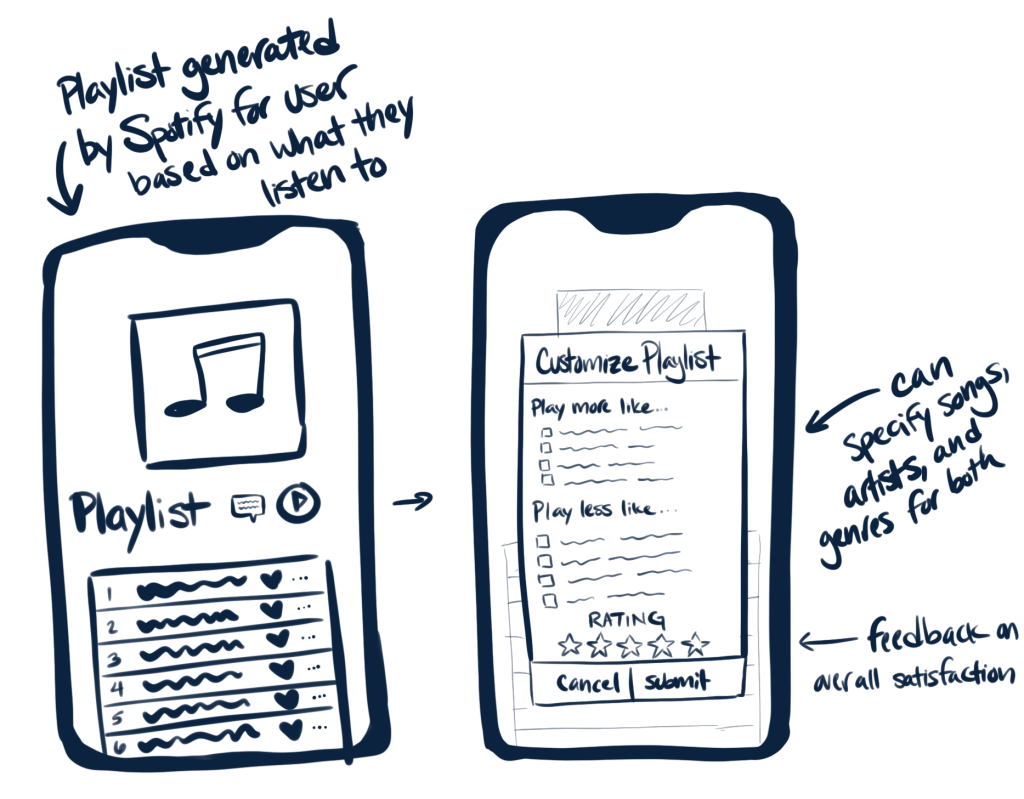
In this sketch, I added a new feature to the playlists generated by Spotify. Next to the play button for the playlist, there is a feedback and customization feature. Clicking it takes the user to a screen similar to settings that lets them customize songs, artists, and genres that appear in the playlist. The user can also leave a star rating reflecting how much they enjoyed the playlist. This feedback can help the algorithm make playlists that are better suited for the user in the future.
Sketching was my favorite approach to ideation because I prefer to work visually whenever possible. I was also able to focus on one concept and find ways to make it solve the problem. It also helped that I sketched last and had already ideated other solutions contributing to this concept.
Conclusion
Ideation can be an extremely valuable experience when done right. If you push yourself for better results, you’ll be surprised by what you can come up with. When I was ideating, I found that taking breaks helps. The goal is to pump out many ideas in a short period, which can be draining. Finding the balance between pushing yourself to greatness and pushing yourself too hard will take practice. Remember that no idea is perfect, but exploration guides you to the best possible solution.
 Victoria Lorenz