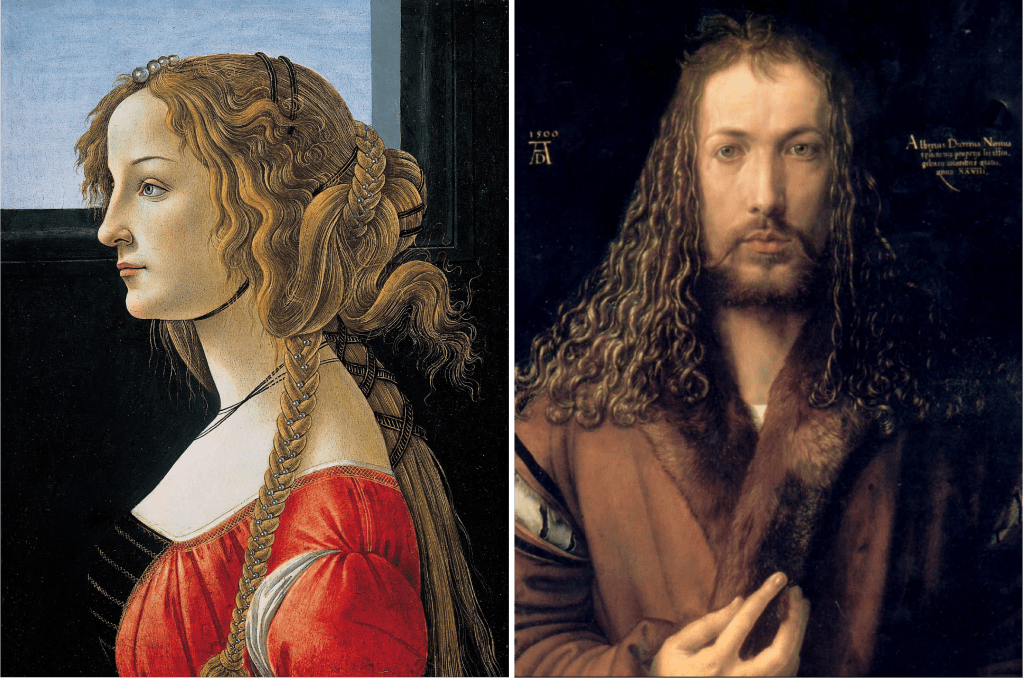
Cover Image: Portrait of Simonetta by Piero di Cosimo and Albrecht Dürer Self Portrait, depicting different views of men and women’s roles during the Renaissance
Gender roles and expectations during the Renaissance in Italy were highly influenced simultaneously by the Middle Ages and by the time’s innovative approach to learning. Social, cultural, and religious norms underwent significant change during this period. The Renaissance took place from the 14th to the 17th century and was full of change and creativity, involving admiration of classical culture and the growth of humanism. Despite these advances, gender roles and expectations were strictly defined and enforced during this era.
Discrepancies and Middle Age Influence
For men, the expected role was to be the family’s protector and pursue many refined occupations, while women were seen as inferior and confined to domestic tasks and childbearing. Women were also expected to be virtuous and chaste, and any deviation from these expectations led to social stigma and shame. Education was also heavily gender-biased, with men receiving a classical education and women receiving a more limited education focused on domestic skills and religious instruction.
In the Middle Ages, men and women often received the same level of education, focusing almost solely on religion. Still, in the Renaissance, a divergence appeared as men were allowed to educate themselves to serve the city and state. Such a position was considered inappropriate for women, so they continued to be confined to studying religion. Leonardo Bruni wrote in 1405, “rhetoric in all its forms – public discussion, forensic argument, logical fence, and the like – lies absolutely outside the province of women.” One hundred years later, Baldassare Castiglione wrote that beauty is more necessary than any other trait a woman can possess, showing consistency in women’s place in Renaissance society.
Artemisia Gentileschi
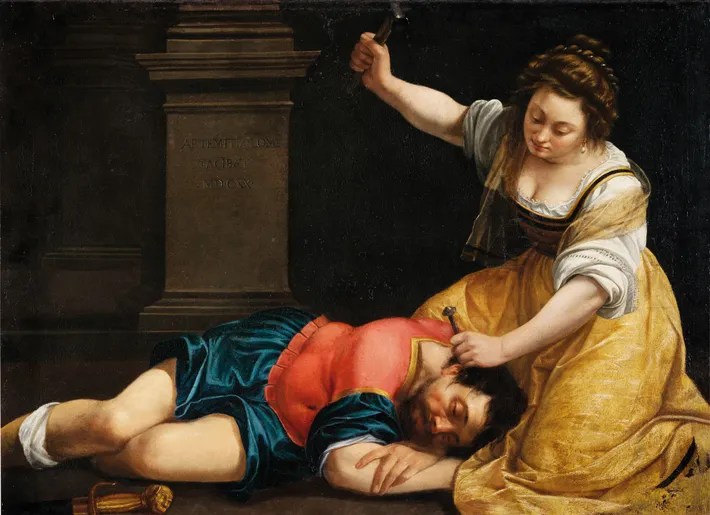
Despite these rigid gender roles, some women during the Renaissance broke through these barriers and made significant contributions to art, science, and literature. For example, artists such as Artemisia Gentileschi challenged the traditional gender roles in the art world. Gentileschi learned to paint from her father and gained recognition throughout her lifetime.
Being a female artist presented unique opportunities to portray women in art because she had insight and experience that men did not. During the Renaissance, men often studied female figures through classical statues because it would be improper for them to use a live model. Art historian Sheila Baker explains, “Because Artemisia was female, she could have women take off their clothes in front of her with no moral impasse whatsoever. Artemisia could depict nudity for a religious
devotional painting like Susanna and the Elders, without the viewer ever worrying that behind that imagery is a real-life situation of a man ogling a prostitute.”
Religion & Marriage
But not all women were as fortunate as Gentileschi. Religion significantly shaped gender roles and expectations during the Renaissance, relegating women to domestic life. The Catholic Church strongly influenced society and reinforced patriarchal ideas about women’s inferiority and subservience. However, the Renaissance also saw the rise of humanism, which challenged these traditional views and advocated for a more equal and just society.
Marriage during the Renaissance was another aspect of society heavily influenced by gender roles and expectations. The Frist Art Museum explains that marriage was “regarded as an alliance between two families who were usually of similar economic, social, and political standing.” Women had very little say in the matter and were expected to be obedient and submissive to their husbands, who were often a decade older than them. This lack of agency and independence was reflected in the law, with women having minimal rights and no control over their property or wealth.
Conclusion
Ultimately, Italy’s Renaissance was a time of immense change and innovation, but gender roles and expectations remained strict and limiting as they were in the Middle Ages. Despite some women breaking through these barriers and making significant contributions, most women were confined to traditional gender roles, facing discrimination and unequal treatment under the law.
Sources
“Life, Love, and Marriage Chests in Renaissance Italy.” Frist Art Museum, Frist Art Museum, fristartmuseum.org/exhibition/life-love-marriage-chests-in-renaissance-italy/#:~:text=In%20Renaissance%20Italy%2C%20arranged%20marriages,by%20a%20decade%20or%20more.
Migdol, Erin. “How Artemisia Gentileschi Broke the Dark Ceiling for Women Artists.” The Getty, The J. Paul Getty Trust, 12 Feb. 2019, www.getty.edu/news/how-artemisia-gentileschi-broke-the-dark-ceiling-for-women-artists/.
Wiesner, Merry E., et al. Discovering the Western Past: A Look at the Evidence. Houghton Mifflin Harcourt, 2007.
 Victoria Lorenz