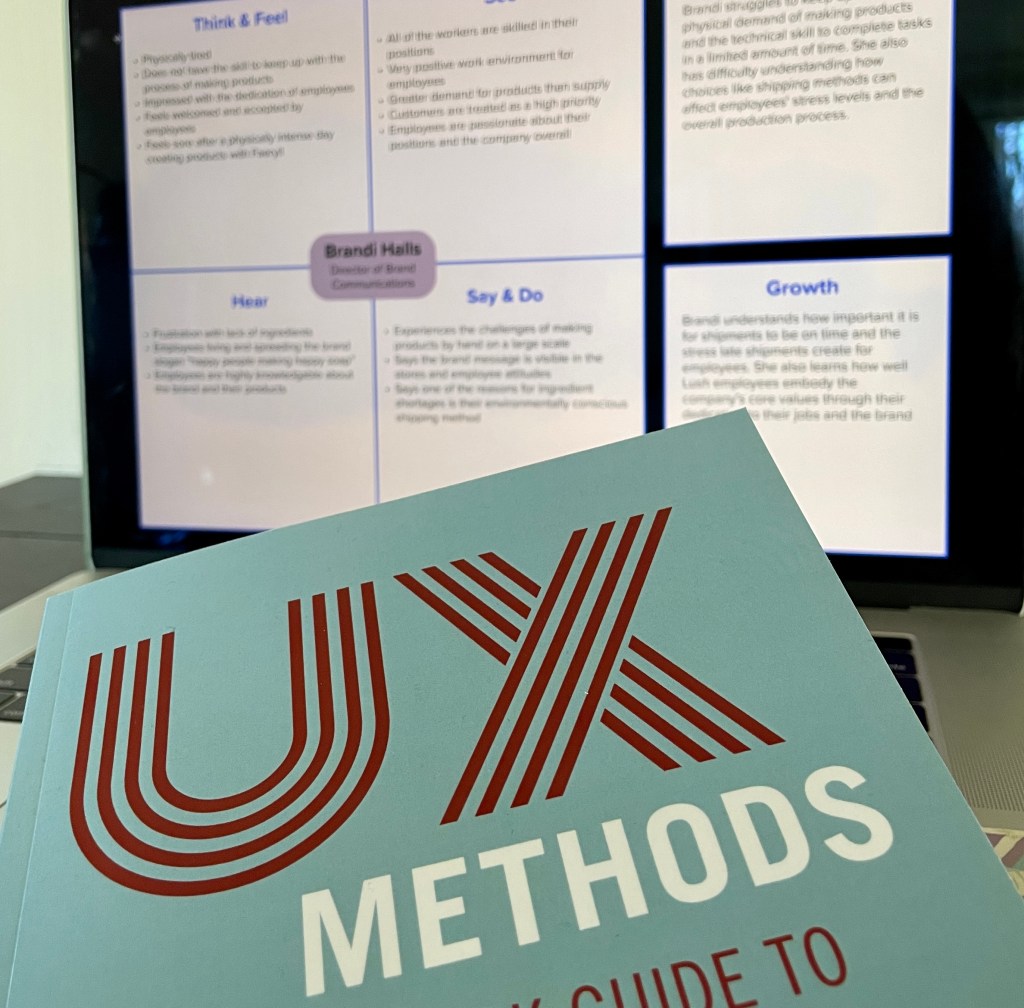
Empathy mapping is a user experience research tool that helps UX designers understand and connect with the user. Pannafino describes the empathy map as a method that “examines users’ thoughts and feelings by asking questions based on a four-quadrant diagram to help understand their motivations and decisions.” Empathy mapping aims to understand the customer’s emotions, thoughts, and motivations so that our products meet or exceed their needs and desires.
The Basics
The first step of empathy mapping occurs before we create the map. Before we can interview the user, we must identify who they are. We can establish an audience by using demographic information, customer personas, or other tools that help us define which characteristics best align with the product we are testing. Once we identify the target customer, the next step is to research and understand their experience. This process can involve speaking with customers directly, observing their behavior, or reviewing customer feedback.
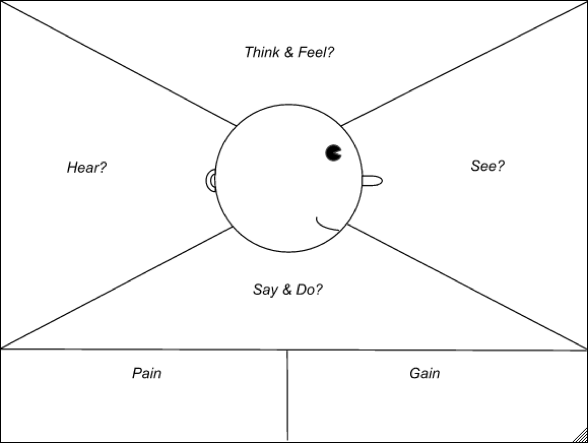
Once the research is conducted, the next step is to create an empathy map. There are four quadrants of an empathy map:
- Says
- Thinks
- Does
- Feels
The ‘says’ quadrant contains what the user says. ‘Thinks’ focuses on our interpretation of the user’s thoughts as they move through the process. ‘Does’ details the actions the user is taking. Feels contains the user’s emotions and how they feel about the experience. Sarah Gibbons of Nielsen and Norman Group explains that there will be overlap and contradictions in empathy maps because “our users are complex humans.” Many UX empathy maps also include two additional sections: pain and gain. Anadea explains that ‘pain’ identifies specific pain points that need attention while gaining details of what the user expects from the experience.
Preparation

Empathy mapping lets UX designers get a raw glimpse into the user experience. Creating empathy maps allows a deeper understanding of the user experience while helping define a clearer understanding of what parts of the process work well and which need to be addressed. Lindsay Munro from Adobe explains that “while it’s possible to create an empathy map alone, it’s better to do it in a team. Empathetic design is a team sport, and it’s essential that each team member thinks about the user when creating a product.” This collaboration combined different perspectives and expertise, providing the best possible result because it is more likely that all aspects of the customer experience are captured and considered.
Says
The ‘says; section of the empathy map captures what the user is saying aloud. UX designers can use these quotes to develop personas, gain insight into needs, and ensure the research question adequately addresses the most vital aspects of the project. Paying attention to what the user says helps us meet their needs and communicate in a way that resonates with their motivations.
Thinks
The ‘thinks’ section of the empathy map captures what the customer is thinking about. This section can include their thoughts about the problem they are trying to solve, the products or services they are considering, and the product they are interacting with. This section can also address the underlying needs and motivations driving the user’s actions.
Does
The ‘does’ section of the empathy map captures the customer’s physical and digital actions, such as searching for information online, talking to friends and family, or making a purchase. Understanding the customer’s behaviors and patterns can help UX designers identify opportunities to improve the experience and to create products or services that better meet their needs.
Feels
The ‘feels’ section of the empathy map captures the emotions that the customer is experiencing. Emotions play a significant role in customer behavior and decision-making, so it is essential to understand what the customer is feeling. For example, a customer frustrated with a product may feel angry or discouraged. Understanding these emotions can help companies to respond in a way that meets the customer’s needs and resolves their frustration.
Application and Benefits
Empathy mapping can be used throughout product development, from ideation to launch. During ideation, empathy mapping can help companies to understand the customer’s needs and to generate ideas that meet those needs. During design, empathy mapping can help to ensure that the customer’s experience is considered in every aspect of the product. During the launch, empathy mapping can help identify potential challenges and develop a plan to address them.
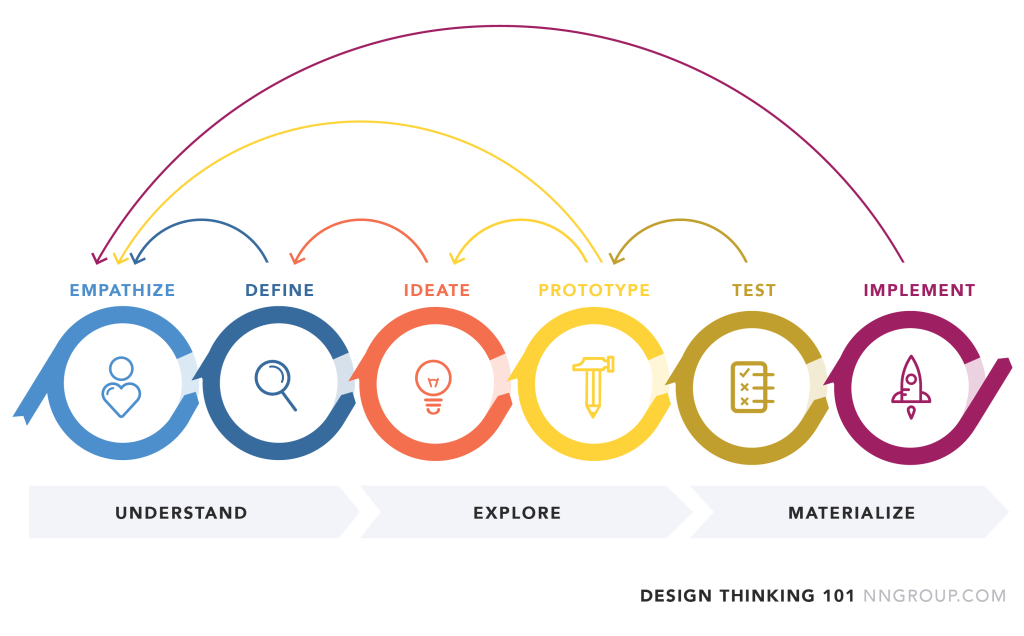
Empathy mapping can be used in various fields but is most closely related to UX because it ties in with the Design Thinking process. Camren Browne explains, “as a rule, you’ll create empathy maps in the empathize stage of the design thinking process, right after you’ve conducted extensive user research.” Design thinking starts with empathy, allowing us to better understand the user and the problem we are trying to solve. Creating empathy maps in this stage is one of the most effective ways to record findings in this stage.
Conclusion
Ultimately, empathy mapping is a valuable tool for anyone wanting to understand and connect with their customers. Creating an empathy map allows companies to understand the customer’s emotions, thoughts, and motivations, which can help them develop products or services that meet their needs and improve the user experience.
Sources
Browne, Camren. “What Is an Empathy Map? [Complete Guide].” CareerFoundry, 29 July 2021, https://careerfoundry.com/en/blog/ux-design/what-is-an-empathy-map/.
Gibbons, Sarah. “Empathy Mapping: The First Step in Design Thinking.” Nielsen Norman Group, 14 Jan. 2018, https://www.nngroup.com/articles/empathy-mapping/.
Mahadik, Omkar. “Empathy Mapping for Design Thinking.” Anadea, 21 Feb. 2019, https://anadea.info/blog/empathy-mapping-for-design-thinking.
Munro, Lindsay. “10 Tips to Develop Better Empathy Maps: Adobe XD Ideas.” XDIdeas, Adobe, 12 Jan. 2020, https://xd.adobe.com/ideas/process/user-research/10-tips-develop-better-empathy-maps/.
Pannafino, James, and Patrick McNeil. UX Methods a Quick Guide to User Experience Research Methods. CDUXP LLC, 2017.
“What Is Design Thinking?” The Interaction Design Foundation, https://www.interaction-design.org/literature/topics/design-thinking.
 Victoria Lorenz