To get a better understanding of the competitors, I conducted research on the top five apps that appear after searching “meditation.” I then downloaded and used each of them, taking detailed notes on hoe they worked, how they made me feel, and features that I particularly enjoyed or disliked. Not only did this give me insight to the UX/UI aspects of the competitors, but it will also help me assess the effectiveness of Mindfulness Bell.
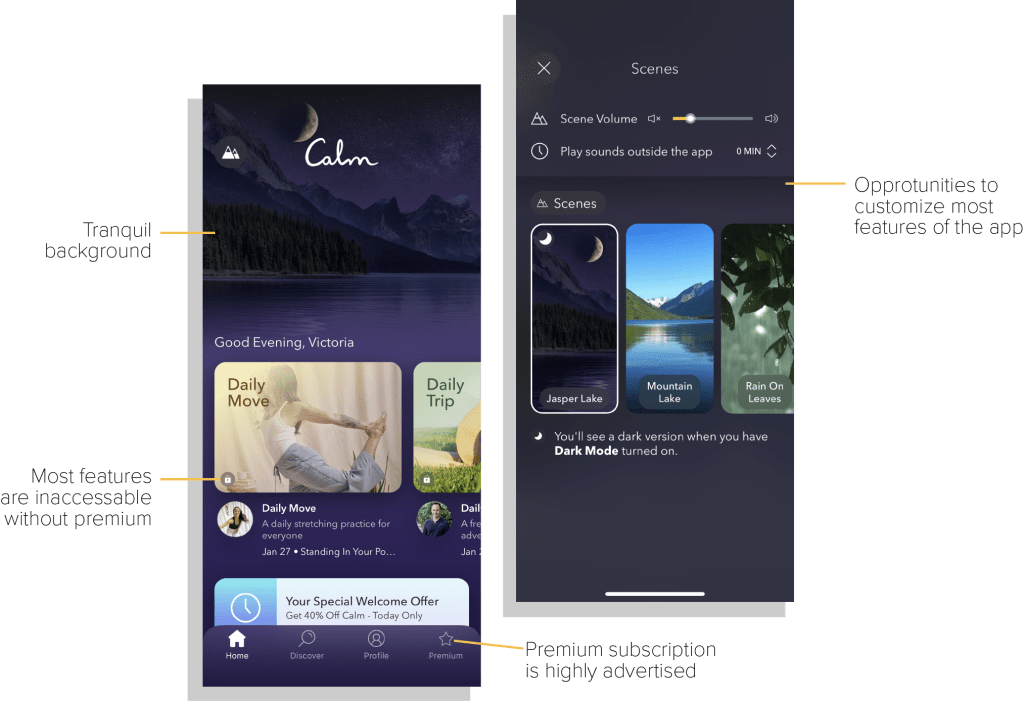
The first app that I examined was Calm. At first, I thought they were the first to appear in the app store which is why it was the first that I used. I later realized that they paid to have it boosted to the top via advertisement. This left me feeling deceived and less willing to enjoy their app. Calm advertises itself as the number one app for sleep, meditation, and relaxation. It had numerous options for guided meditations and sleep meditations but many of them required a subscription for $69.99 per year. It has a tab in the navigation dedicated entirely to sleep which is consistent with their focus on providing better sleep.

The next app I look at was Headspace. I already had a positive association with Headspace because I did a guided meditation that they offered on Netflix about a year ago. When you first open the app it walks you through an introduction which includes a short breathing exercise with appealing visuals and haptics to make the experience more engaging. When I finally got to the regular homepage of the app I was disappointed to find that there were almost no features that I could use without buying the subscription ($69.99). My previously positive association with Headspace disintegrated rather quickly at this realization. Headspace and Calm are very similar and if I had to choose between the two I would go with Calm because it had more available resources.

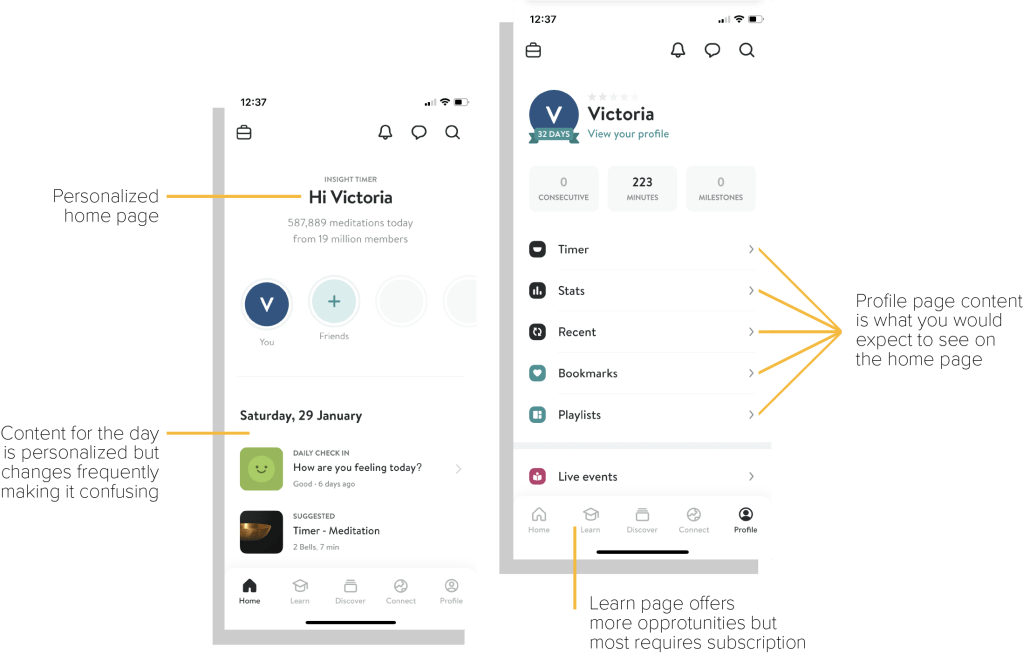
The next app on my list was Insight Timer. I initially downloaded this app about six months ago to guide my own meditation practice but haven’t taken the time to explore it much. I only use it for the timer and am somewhat indifferent to the app as a whole. When conducting my research on it I tried to stay as unbiased as possible and ended up liking the app more afterward than I had previously. I found that it had a lot to offer including the ability to log journal entries but many of the appealing functions are hidden away. Another thing I liked about Insight Timer was the number of free options it has. There are more free guided meditations than on Calm or Headspace and the subscription for premium content is cheaper ($59.99). Overall I found Insight Timer to have the most to offer but also had the most frustrating interface.

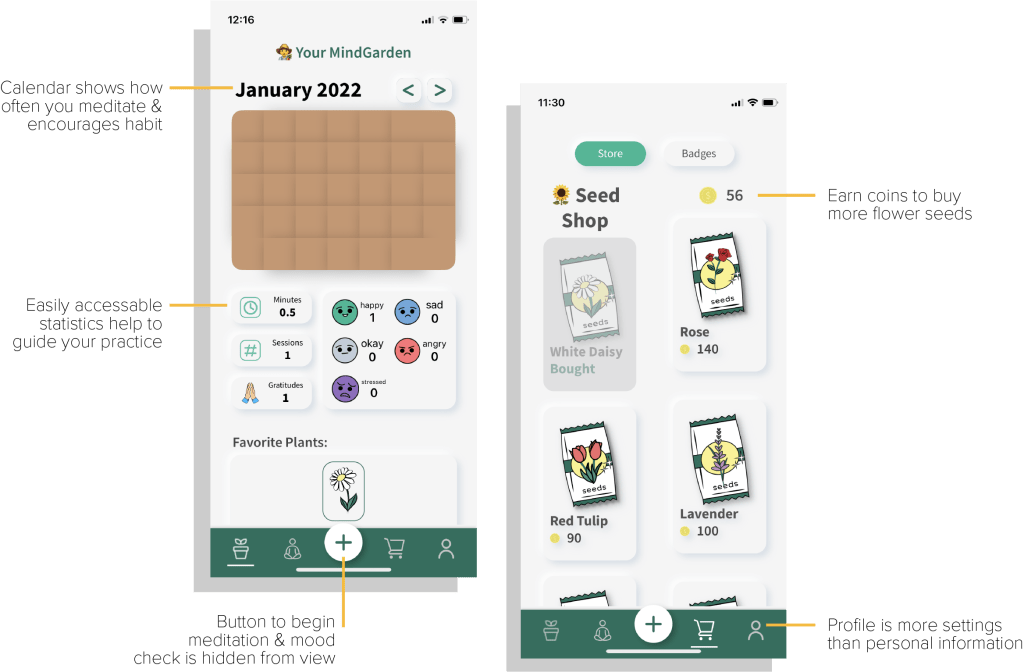
The next app I looked at was MindGarden: Calm Meditation. This app claims to gamify meditation with the goal of making it more enticing to maintain your practice. I was skeptical of this app at first because gamifying meditation seems counterproductive to the general purpose of meditation. While I would not use this app, it offers effective features for those who want to begin a practice but struggle to stick with it. The visuals are not bright or flashy and it has a clear visual layout so you can see your progress. One thing that I didn’t like about the app is that after 30 days you are forced to purchase the premium version. While it is less expensive than the other apps at $39.99 a year, it also has less content to offer.

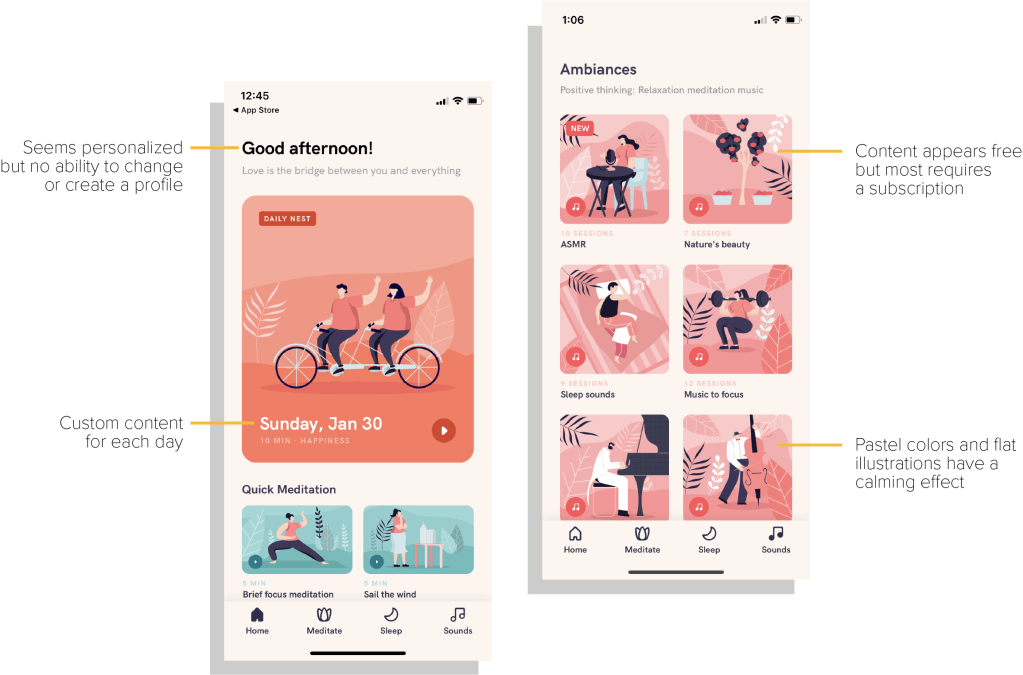
The last app that I examined was Meditation Nest. There were some free meditations but most of the options were only for premium access. There didn’t seem to be enough free meditations that you could effectively use the app without paying for it. Additionally, premium access costs about $192 per year, far surpassing any of the other competitors. This app was also different from the rest because it had no profile option that reflected personal information like preferences or statistics.
 Victoria Lorenz